A bromeliad is a striking houseplant that is loved for its colourful flowers, tropical appearance and relatively easy care. However, watering is often the part of bromeliad care that causes the most confusion. Unlike many other houseplants, a bromeliad absorbs water in a unique way. Understanding how it grows in its natural habitat makes caring for the plant much easier.
This guide explains how often a bromeliad should be watered, how much water it needs, the best type of water to use and the most common mistakes to avoid. With the right care, a bromeliad can remain healthy and colourful for many months.
How Much Water Does a Bromeliad Need?
A bromeliad requires relatively little water. In tropical rainforests, many bromeliad species grow on trees instead of in the ground. Rainwater collects in the centre of the plant, where it is stored and gradually absorbed. Because of this natural growing habit, bromeliads are adapted to receiving small amounts of water rather than heavy watering.
For most varieties, watering once a week is sufficient. During the winter months, the plant grows more slowly and needs less moisture. Watering every ten to fourteen days is usually enough during this period.
Always check that the compost is only slightly moist before watering again. The growing medium should never remain wet for long periods, as excessive moisture can cause root rot.
Watering the Central Cup
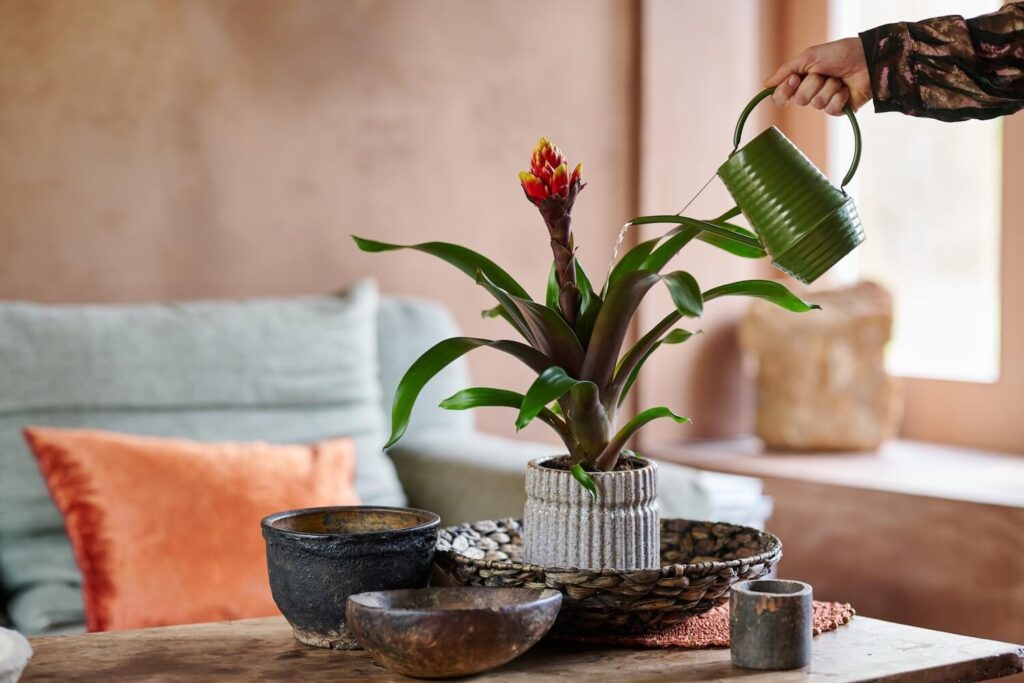
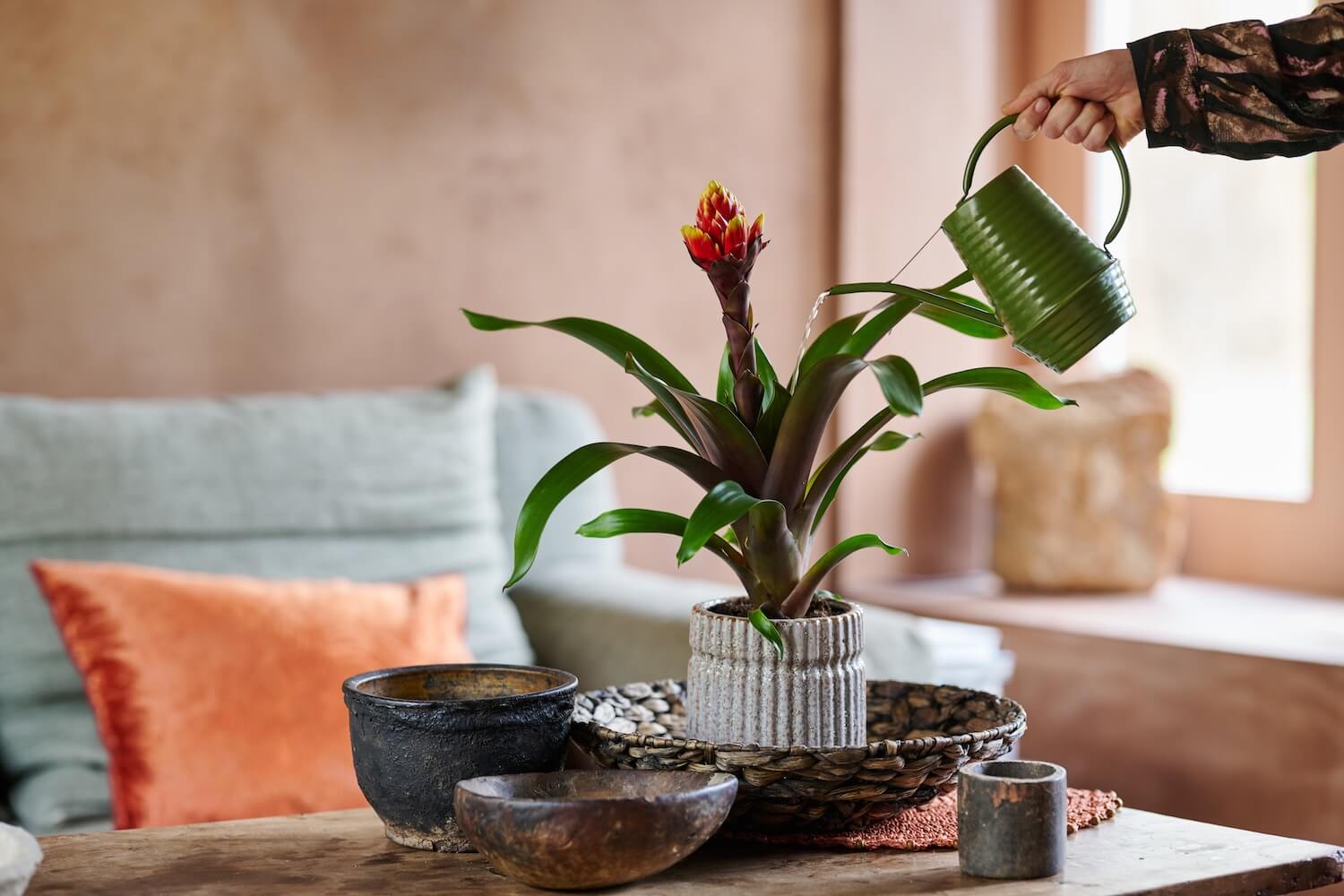
One of the most distinctive features of a bromeliad is its central cup, also known as the rosette. This is the area where the leaves meet in the middle of the plant. In nature, rainwater collects here and provides the plant with much of the moisture it needs.
For most bromeliad species, it is perfectly normal to pour a small amount of water directly into the central cup. The water should be replaced approximately once a week. Fresh water helps prevent bacteria, mould and unpleasant odours from developing inside the plant.
Using clean, room-temperature water will help keep the bromeliad healthy throughout the year.
Don't Forget the Potting Compost
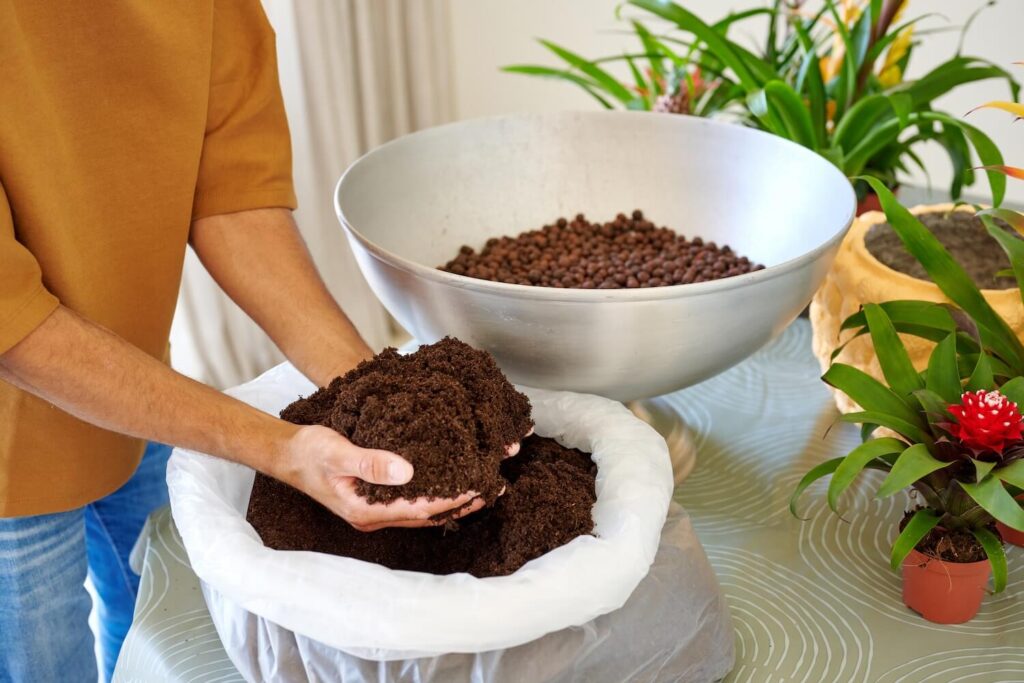
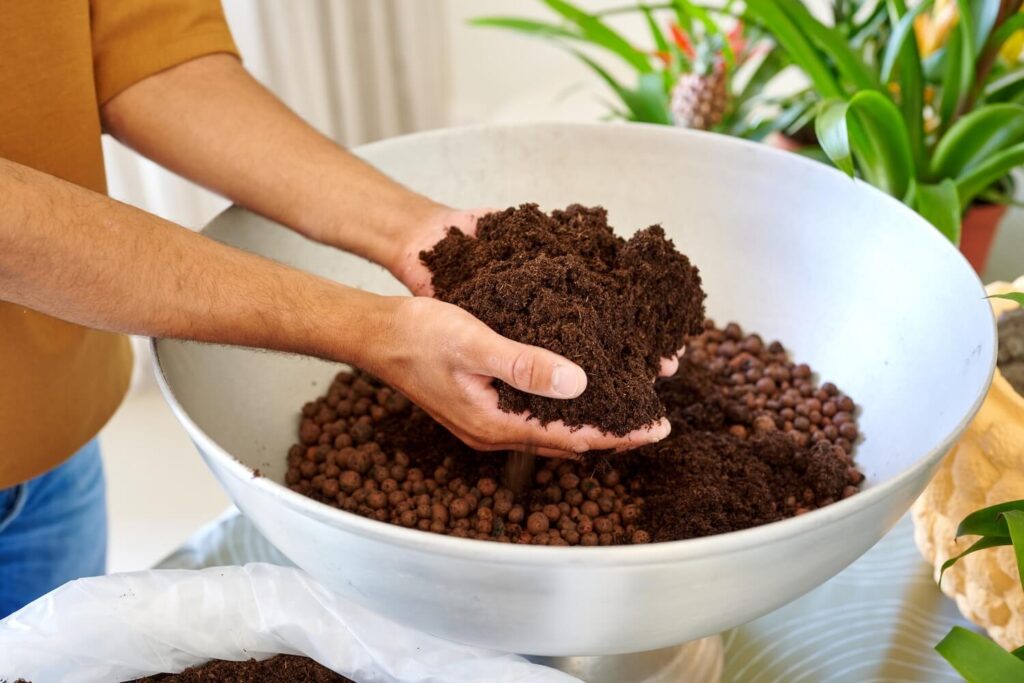
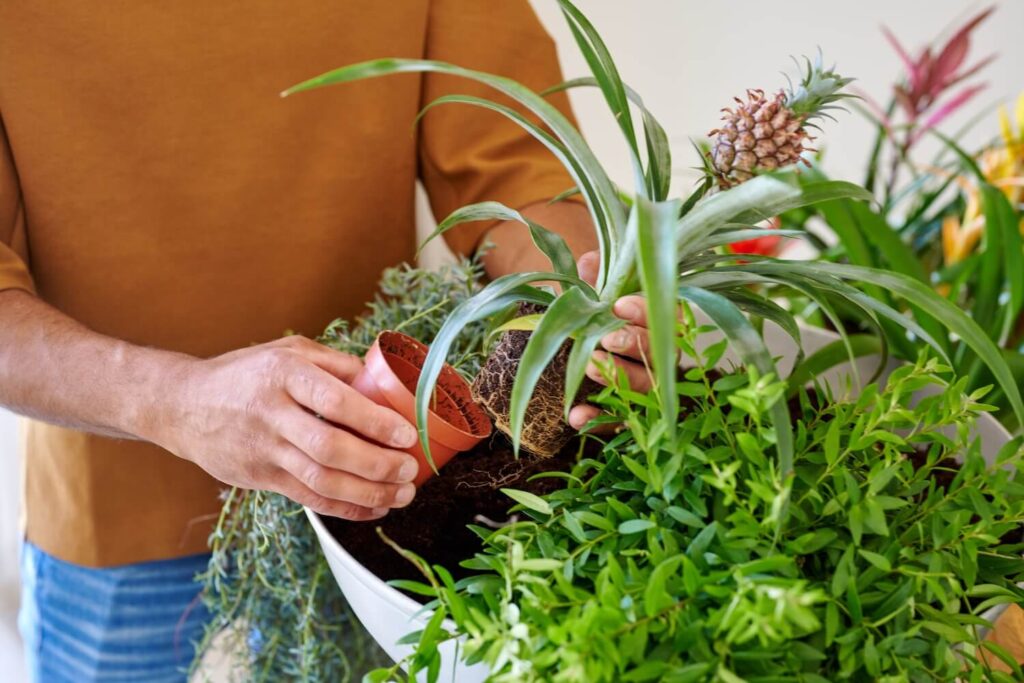
Although bromeliads absorb much of their moisture through the central cup, the roots still play an important role. They anchor the plant and absorb nutrients and a small amount of water from the compost.
The compost should remain lightly moist but never become waterlogged. Good drainage is essential, and any excess water should be able to drain away freely. Standing water at the bottom of the pot can quickly lead to root rot, which is one of the most common reasons why bromeliads decline.
Which Type of Water Is Best?
Soft water is the best choice for bromeliads. Rainwater is ideal because it contains very little lime. Filtered water is also suitable, while tap water can usually be used provided it has reached room temperature before watering.
In areas with particularly hard water, rainwater is often the better option, as it helps prevent mineral deposits from forming on the leaves over time.
Signs of Overwatering
Overwatering is the most common problem when caring for a bromeliad. Constantly wet roots receive too little oxygen, which eventually causes them to rot. Once this happens, the plant struggles to absorb water and nutrients properly.
Common signs of overwatering include yellow leaves, soft foliage, soggy compost and an unpleasant smell coming from the pot. If these symptoms appear, allow the compost to dry slightly before watering again.
Signs of Underwatering
Although bromeliads tolerate short periods of drought quite well, they can still suffer from insufficient water. Leaves may begin to curl, become limp or develop dry brown tips. The central cup may also become completely dry.
Fortunately, a healthy bromeliad usually recovers quickly once a regular watering routine is restored.
Should a Bromeliad Be Misted?
Misting is not essential, but it can be beneficial when indoor humidity is low. During hot summer weather or throughout the heating season, lightly misting the leaves with room-temperature water can help create a more humid environment around the plant. Avoid leaving large amounts of water on the flowers, as this may shorten their lifespan.
Misting is important for Tillandsia usneoides. This plant absorbs moisture through its leaves and prefers higher humidity levels. Regular misting is especially important on warm summer days or during winter, when indoor heating can cause dry air. Preferably use lukewarm water and mist the plant evenly. Make sure the plant can dry properly after misting and does not remain wet for long periods.
Common Watering Mistakes
Most watering problems occur because a bromeliad receives too much water rather than too little. Treating the plant like a traditional houseplant often results in overly wet compost. Another common mistake is allowing water to remain in the decorative pot or forgetting to refresh the water inside the central cup.
Providing small amounts of water, maintaining good drainage and replacing the water in the central cup every week are the simplest ways to keep a bromeliad healthy.
Conclusion
Watering a bromeliad is much easier than many people expect. The plant needs relatively little water and naturally absorbs much of its moisture through the central cup. Keeping the compost lightly moist, preventing standing water and replacing the water in the rosette each week will create the ideal growing conditions.
With the right care, a bromeliad will remain healthy, vibrant and attractive for many months, making it one of the easiest tropical houseplants to enjoy indoors.
Frequently Asked Question About Watering a Bromeliad
How often should I water a bromeliad?
Most bromeliads only need watering once a week. During winter, watering every ten to fourteen days is usually sufficient.
Should I put water in the centre of a bromeliad?
Yes. Most bromeliads naturally store water in their central cup. Replace the water with fresh water every week.
Can a bromeliad receive too much water?
Yes. Overwatering is the most common cause of root rot, yellow leaves and poor plant health.
What is the best water for a bromeliad?
Rainwater is ideal because it is low in minerals. Filtered water or room-temperature tap water are also suitable for most homes.
Why are my bromeliad's leaves turning yellow?
Yellow leaves are often caused by excessive watering. Check whether the compost is staying too wet and ensure excess water can drain away properly.
Should I mist my bromeliad?
Misting is optional but can help increase humidity during hot weather or in centrally heated homes.
How long does a bromeliad flower last?
Depending on the variety, the flowers usually remain attractive for three to six months. After flowering, the mother plant often produces offsets, also known as pups, which can grow into new plants.